



You can identify almost any golf club in a few minutes by checking five things in order: the material, the model name, the hosel, the crown and the sole markings. Knowing exactly what you have is the first step to finding out what it's worth, whether you plan to sell, trade in or keep playing it.
Step 1: Look at the material
- Real wood grain: a persimmon or laminated wood, generally from before the 1990s.
- Small, shiny metal head: an early metal wood from the 1980s or early 1990s.
- Larger hollow titanium head: 1990s and early 2000s.
- Full-size 460cc head: roughly 2004 and later, after the 460cc limit took effect.
Step 2: Find the model name
It's almost always on the sole, the back of the head or the crown. On irons, check the back cavity and the hosel. On putters, check the sole and the top line. Search the brand and model together, and add the loft or club number if you can see it.
Step 3: Check the hosel
An adjustable sleeve with markings for loft or lie usually means the club was made around 2009 or later. Fixed hosels point to older models or to some players' designs.
Step 4: Look at the crown and finish
Brands change colors and materials almost every release, so the crown is often what separates two models with similar names. White crowns, carbon fiber patterns, matte versus gloss finishes and colored weights on the sole are all clues. Compare your club with photos of the model you think it is, including the release year.
Step 5: Read the sole markings
Loft, club number, shaft flex (on the shaft label) and sometimes a serial number are usually printed or stamped here. A serial number helps with putters and premium models.
How to read a Ping color code
Ping irons have a colored dot or paint on the hosel that shows the lie angle they were built to. Black is standard. Colors going toward maroon are more upright (for taller players or those with upright swings), and colors going toward gold are flatter.
| Color | Lie angle vs standard |
|---|---|
| Maroon | 5 degrees upright |
| Silver | 4 degrees upright |
| White | 3 degrees upright |
| Green | 2 degrees upright |
| Blue | 1 degree upright |
| Black | Standard |
| Red | 1 degree flat |
| Orange | 2 degrees flat |
| Brown | 3 degrees flat |
| Gold | 4 degrees flat |
Always check the dot when buying used Ping irons. A set built 3 degrees upright can feel very wrong for a shorter player.
How to spot a fake Scotty Cameron putter
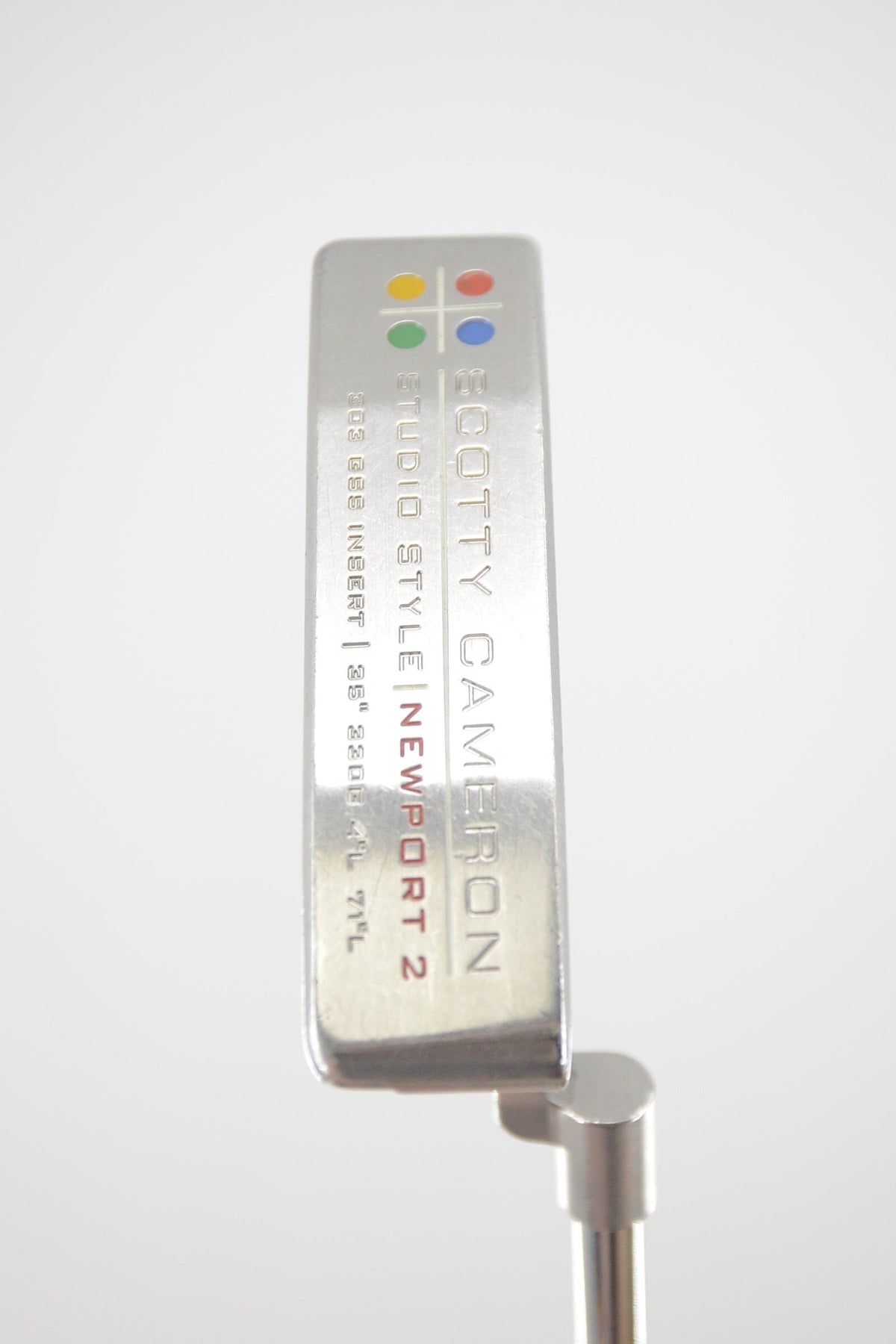
- Milling: real Camerons have crisp, even milling marks and clean lettering. Fakes often show rough casting marks or uneven text.
- Sole stamping: the model name and markings should be sharp and consistent in depth and font.
- Sound and feel: a genuine milled putter sounds solid. Fakes often sound hollow or clicky.
- Price: a new-looking Cameron at a fraction of the usual price is a red flag.
Common questions
How do I find out what my golf clubs are worth?
Identify the brand, model and club type first, then check condition. Our trade-in page gives you a value for your clubs.
Are old golf clubs worth anything?
Clubs from the last 10 or so years from major brands usually have resale value. Classic putters, especially Scotty Cameron and older Ping Anser models, can hold value for decades. Very old or off-brand sets are often worth more as a donation or starter set than as a sale.
Not sure what you have? Bring it by our shop in Farmers Branch or send photos through the trade-in page. To see what similar clubs sell for, browse used putters and used drivers.