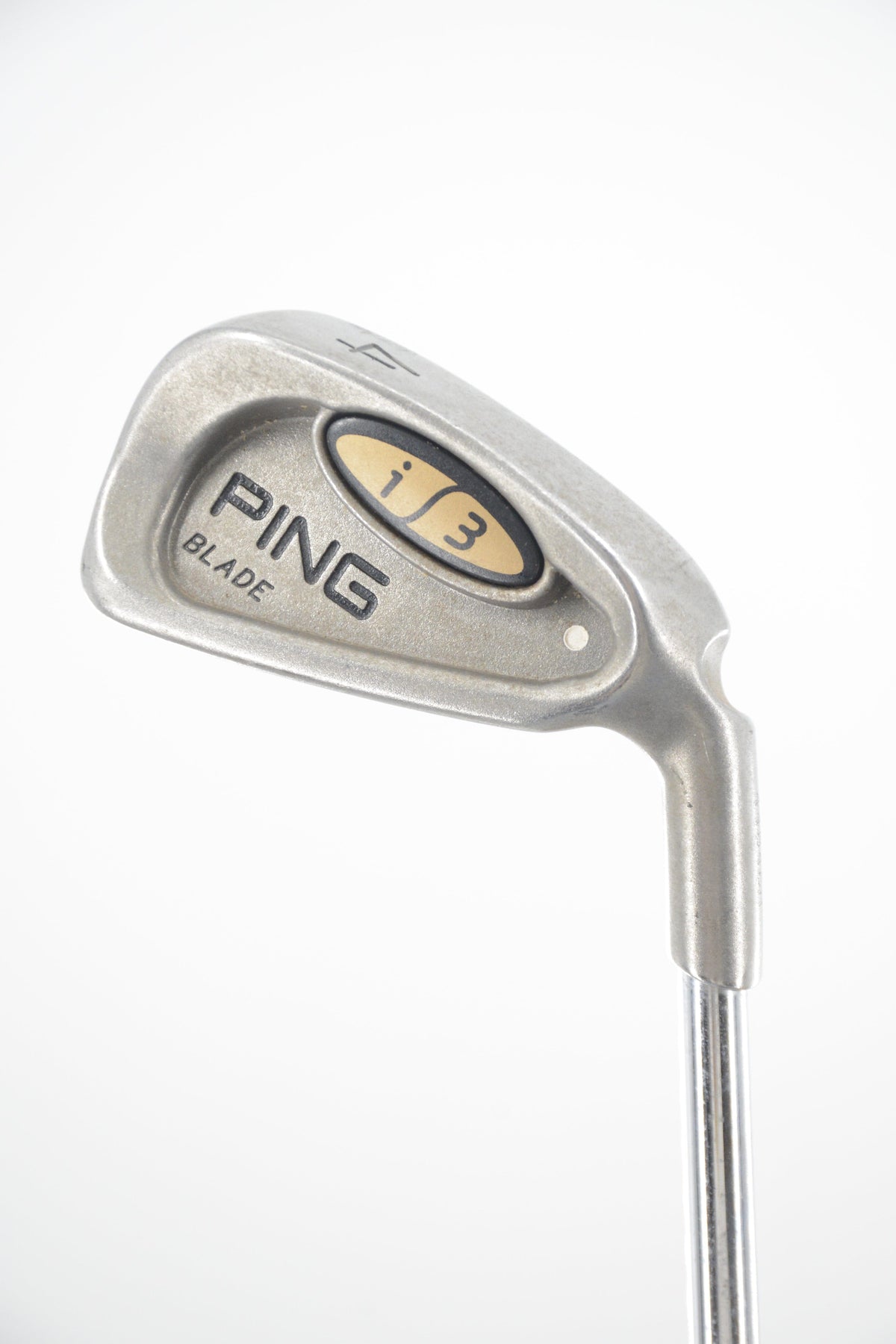



The Ping Karsten I, also called the K1, is the perimeter weighted iron set Karsten Solheim introduced in 1969, and its heads were investment cast from stainless steel instead of forged. It came before the Ping Eye and Eye 2 and helped set up the cavity back approach Ping is still known for. Karsten I irons still turn up in used bins, and we have a few dozen of them listed as single irons.
Perimeter weighting and investment casting
Solheim had built his putters around perimeter weighting, and in 1969 Ping introduced irons based on the same principle. Putting more of the weight around the edges of the head makes the club more stable on shots that miss the center of the face. The K1 heads were made by investment casting, which means pouring molten metal into molds, rather than forging, where the head is shaped from a solid piece of steel. The irons caught on quickly with everyday golfers.
Where the Karsten I fits in Ping history
Ping was not the first company to sell investment cast irons. The Lynx Master Model was the first cast iron to sell in large numbers, but Ping's K series and the Ping Eye irons that followed soon took over, and the Eye 2 went on to make casting the industry standard. The Karsten I was followed by the Karsten II and Karsten III, which kept the same weighting idea with updated head shapes.
Common questions
What year did Ping Karsten I irons come out?
Ping introduced the K1 set in 1969. The Karsten II and Karsten III came after it.
Are Ping Karsten I irons forged?
No. They are investment cast stainless steel, which was one of the things that set them apart when they were released.
You can browse our used Ping Karsten I irons, with the flex and length listed in each title. To see what came next for Ping, read our post on the Ping Eye2 lawsuit and square grooves.