



Scotty Cameron is the putter designer whose name has appeared on Titleist putters since 1994. He learned the craft in his father's garage as a kid, spent the early 1990s making putters for several other companies, and signed an exclusive deal with Titleist's parent company that turned a small-batch putter maker into the most recognizable name in the category.
Who is Scotty Cameron?
Don T. "Scotty" Cameron was born on 8 November 1962 in Glendale, California. He learned putter making from his father, working in the family garage from an early age. That detail matters more than it sounds: the hands-on, one-putter-at-a-time approach is the thing he kept when the scale changed.
Before Titleist: 1991 and the companies most people forget
Cameron did not start at Titleist. In 1991 he was designing and building putters and working with Maxfli, the Ray Cook Golf Company and Cleveland Golf. His first retail production putter that year carried an unglamorous name: the Fry's Pity Putter. Later in 1991 he began producing putters exclusively for Mizuno.
He also built putters under his own company, Cameron Golf International. By 1994 he was turning out close to 10,000 putters a year, selling his Classics for around $300, which was serious money for a putter at the time.
One early marker of what was coming: Bernhard Langer won the 1993 Masters using a Cameron prototype, before Cameron had any relationship with Titleist.
August 1994: the Titleist deal
In August 1994, Titleist's parent, the Acushnet Company, beat out five other companies to sign Cameron to make putters exclusively for them. That is the hinge point of the whole story. A maker producing thousands of putters a year suddenly had the distribution of one of the largest companies in golf behind him, and Acushnet got a designer with credibility among tour players.
The early Titleist Scotty Cameron putters are now the collector end of the market. Models from the mid and late 1990s include the Napa, the Newport and the Newport 2, which was introduced later in 1996. Finishes and inserts from that era, the oil can finish and the teryllium insert in particular, are the details collectors look for. Clean examples of the more sought-after early models can approach $1,000.
The Newport 2 and the Tiger Woods association
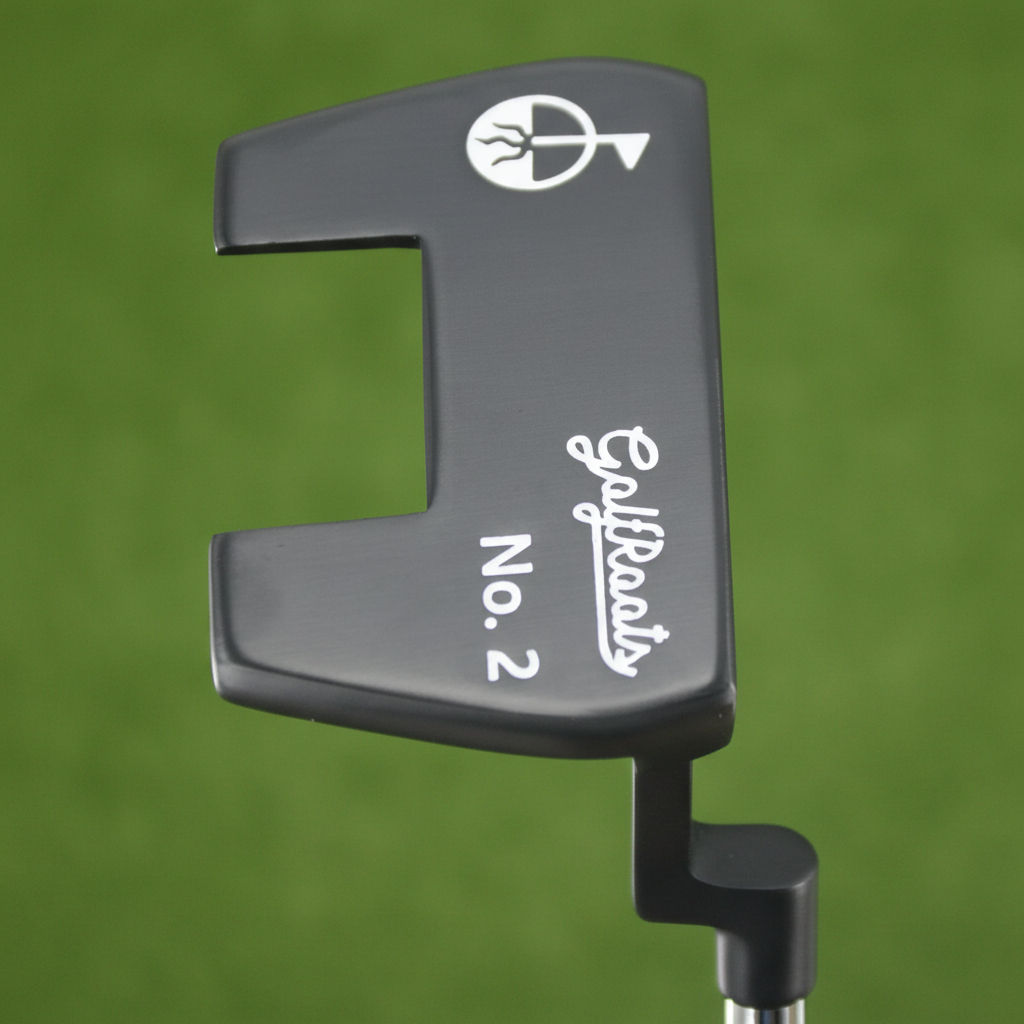
The model that carried the brand into the mainstream was the Newport 2: a blade putter with a plumber's neck, a simple shape, and nothing clever about it. Tiger Woods used a Scotty Cameron putter for most of his career and through the bulk of his major championship wins. He used a different Cameron putter to win the 1997 Masters.
You will see a precise figure quoted for how many of Woods's majors came with a single Cameron putter. We are not going to repeat a number, because the counts in circulation do not reconcile with each other and we could not verify one. What is beyond dispute is that his putter was a Scotty Cameron through the great majority of those wins, and that association did more for the brand than any advertisement could.
What the brand built after that
Cameron's output since has run in two streams. One is the retail line, which has moved through Studio Style, Select, Special Select, Phantom and the current Studio Style range, with regular updates to shapes, inserts and finishes. The other is Tour-only and limited work: small runs, custom stamping and one-off builds for players and collectors, which is where the resale prices get strange.
In July 2014 the Scotty Cameron Golf Gallery opened in Encinitas, California, a public-facing home for the brand's custom and collector side.
Why old Scotty Camerons hold value
Most golf equipment loses value on a predictable curve. Putters do not follow it, and Scotty Camerons least of all. Three reasons:
- A putter does not go obsolete. A 1998 driver is beaten by a modern one. A 1998 blade putter still rolls a ball on a flat surface exactly as well.
- Shapes are the product. People want a specific head shape and milling, and old models are the only place to get discontinued ones.
- Collectors compete with players. Two different kinds of buyer chase the same limited supply.
The practical result for a buyer today: a used Scotty Cameron is rarely cheap, but it also rarely falls much further. If you buy a clean one at a fair price and decide it is not for you, you tend to get most of your money back.
Buying one used
We keep used Scotty Camerons in stock, including Newport 2 models and the wider Scotty Cameron range, and you can roll any of them before you buy at our shop in Farmers Branch. For prices and what to look for, read where to buy a used Scotty Cameron putter and what it costs, and Newport 2 vs Phantom if you are deciding between blade and mallet.
Counterfeits are a real problem in this category, which is one reason buying from a shop that inspects what it sells matters more here than with irons.
FAQ
When did Scotty Cameron start making putters for Titleist?
August 1994, when the Acushnet Company signed him to an exclusive deal, beating five other companies.
What did Scotty Cameron do before Titleist?
He worked with Maxfli, the Ray Cook Golf Company and Cleveland Golf in 1991, then made putters exclusively for Mizuno, while also selling putters through his own Cameron Golf International.
What was the first Scotty Cameron putter?
His first retail production putter was the Fry's Pity Putter in 1991, well before the Titleist years.
When was the Newport 2 released?
It was introduced later in 1996.
Who won a major with a Cameron putter first?
Bernhard Langer won the 1993 Masters with a Cameron prototype, a year before the Titleist deal.
Why are Scotty Cameron putters expensive?
Limited runs, collector demand, milled construction and the tour association. A putter also does not become technically obsolete, so older models keep their buyers.
More equipment history: the history of the putter and the Ping Eye2 lawsuit. Thinking about trading a putter in? Start with our trade-in calculator.