



"In the leather" means a putt is short enough to be conceded as a gimme: if the ball sits closer to the hole than the length of your putter from the head up to the bottom of the grip, your playing partners will usually let you pick it up and count it as holed with one more stroke. Some groups use a stricter version, the length of the grip itself, but the idea is the same. It's a quick way to settle "is that good?" without arguing about feet and inches.
You'll hear it on just about every casual tee sheet in Dallas and everywhere else. Below is how it's measured, when it actually counts under the Rules, and what we know (and don't know) about where the phrase came from. If you want more terms like this one, our golf terms glossary covers 60 of them.
How do you measure "in the leather"?
The common method goes like this. Lay your putter on the green with the putter head in the cup. If the ball is between the cup and the bottom of the grip, it's in the leather. With a standard 34 or 35 inch putter, that works out to roughly two feet.
There's an older, tighter version too. GOLF.com, citing The Historical Dictionary of Golf, notes that the phrase originally referred to the length of the grip itself, about 12 inches. Under that reading, only a putt shorter than the grip counted. Most weekend groups drifted to the more generous putter-head-to-grip measurement over the years, but you will still run into players who use the old one, so it pays to ask before the first green.
A few things make it fuzzy in practice:
- Putter length. A 33 inch blade and a long or arm-lock putter give you very different distances. If one player in the group carries a much longer putter, agree on a number instead.
- Grip size. Oversized and pistol grips start at different points on the shaft, which shifts where "the leather" begins.
- Nobody actually lays the putter down. Most of the time it's an eyeball call. That's fine for a friendly round, as long as everyone is generous in the same way.
Are putts in the leather allowed in stroke play?
No. In stroke play under the Rules of Golf, every player has to hole out on every hole. Rule 3.3c says that if you fail to hole out, you have to correct it before you tee off on the next hole (or, on the last hole, before you return your scorecard), or you're disqualified. There are no gimmes in a stroke play event, whether it's a club championship or a qualifier, no matter how short the putt is.
That's why you'll see tour players tap in from six inches on TV. They aren't being fussy. In stroke play they don't have a choice.
Where do gimmes count under the Rules?
In match play. Rule 3.2b lets a player concede the opponent's next stroke, a hole, or the whole match. Once a stroke is conceded, the ball is treated as holed with that next stroke, and the concession can't be declined or taken back. "In the leather" is basically an informal guideline for when a concession makes sense. If you're new to the difference between the two formats, our piece on match play vs stroke play walks through it.
One match play tip: a concession has to come from your opponent. You can't concede your own putt, and if you pick up without a clear concession you can be penalized.
How is it used in a casual round?
Most recreational golfers play a loose version of stroke play where short putts get picked up to keep the pace moving. That's where "in the leather" lives. A few habits keep it fair:
- Settle the rule on the first tee: grip length, putter head to grip, or "anything inside two feet."
- Count the stroke. A gimme means the putt counts, not that it disappears. If you're lying 3 and pick up a two footer, write down 4.
- Be consistent. If you take them, give them.
- For handicap rounds, the World Handicap System lets you record a "most likely score" on a hole you didn't finish. Treat that honestly, especially on putts that are not really tap-ins.
For more on short-putt etiquette, see our full explainer on what a gimme is. And if those two footers have started to feel longer than they look, our article on the yips might sound familiar.
Where does the term come from?
The short honest answer is that nobody has pinned down exactly when "in the leather" entered golf slang. GOLF.com says as much: the exact date the phrase came into use is hard to establish.
What we can say is that the name lines up with how clubs were made for most of the game's history. Before molded rubber grips took over, grips were typically leather strips wrapped around the shaft. Golf Pride, the company most associated with the rubber slip-on grip, was founded in 1949, and its own history describes molded rubber eventually overtaking leather as the preferred material. So for generations of golfers, "the leather" simply meant the grip, and measuring a putt against it was a natural yardstick. The phrase stuck even though most putters today wear rubber, polymer or synthetic grips.
Beyond that, any specific origin story you hear (a particular club, player or year) is guesswork as far as we can find. We'd rather tell you it's unknown than make one up.
Does putter length change what counts as in the leather?
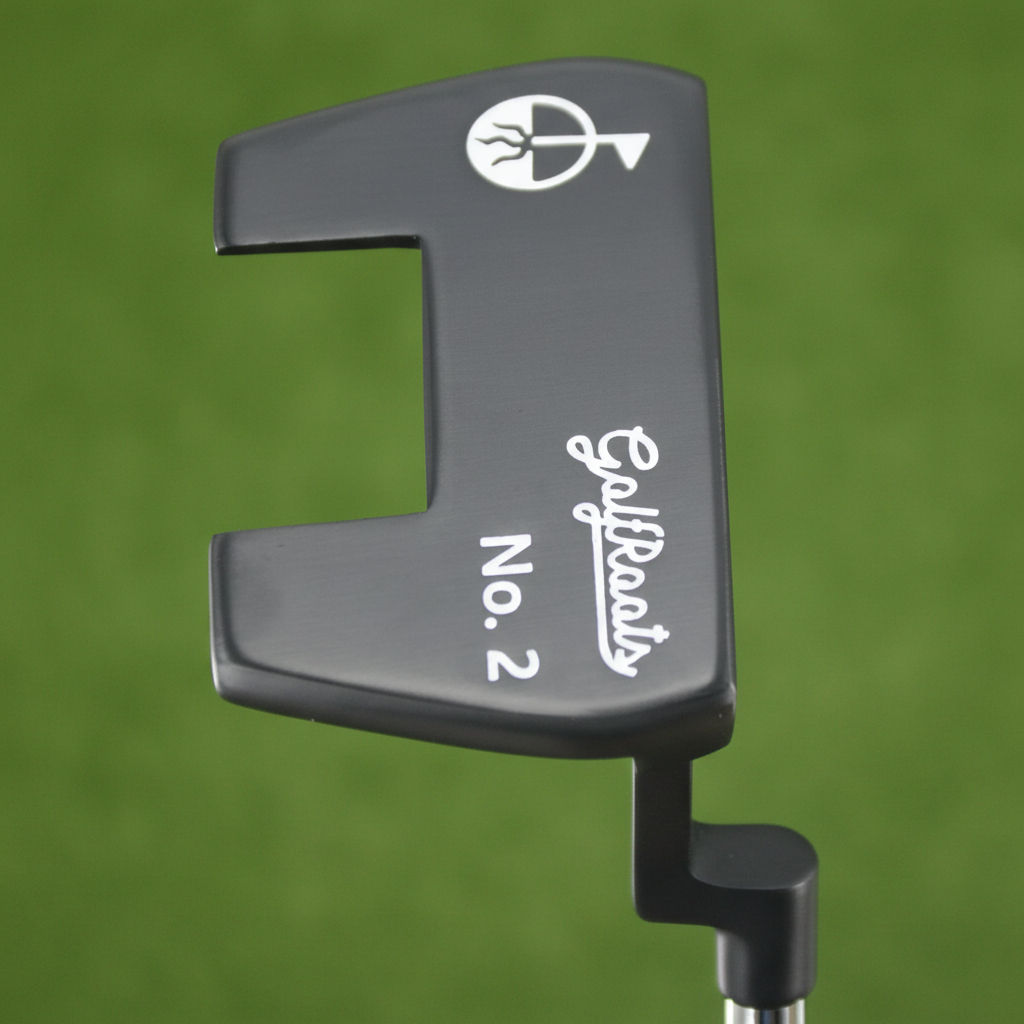
It does, which is part of why the phrase is a guideline and not a measurement. If you're shopping for a new flat stick, length is worth thinking about for reasons that have nothing to do with gimmes: it affects your posture, eye line and how the putter swings. Every used putter we list in our putter collection shows its exact length and a 1 to 10 condition grade, and if you're near Farmers Branch you're welcome to come roll a few in the shop at 13260 Josey Ln, Suite 106, Monday through Friday, 8am to 5pm.
FAQ
How long is "in the leather" in feet?
Using the putter-head-to-grip method on a standard putter, about two feet. Using the older grip-length method, about one foot.
Is "in the leather" the same as a gimme?
Close. A gimme is any conceded putt. "In the leather" is a common rule of thumb for how short a putt should be before it gets conceded.
Can I take a gimme in a stroke play tournament?
No. In stroke play you must hole out on every hole, or correct the mistake before teeing off on the next hole, or you're disqualified.
Do I add a stroke when a putt is conceded?
Yes. A conceded putt counts as holed with your next stroke, so you add one to your score for that hole.
What if our group has different putter lengths?
Agree on a fixed distance before the round, like "inside two feet," so nobody gains an edge from a longer putter. Rounds go smoother when the bogeys and double bogeys are the only thing anyone's complaining about.