




A bunker is a specially prepared area of sand on a golf course, usually a hollow near the green or along the fairway, often called a sand trap. Under the Rules of Golf it has its own set of rules (Rule 12): you can't touch the sand with your club before your stroke, but since 2019 you can move loose impediments like leaves and twigs.
Bunkers are where most golfers lose the most strokes per shot. Knowing the rules keeps you from adding penalty strokes on top of that, and having the right wedge makes getting out a lot easier.
What counts as a bunker?
A bunker is an area of sand the course has prepared on purpose, usually a hollow from which turf or soil was removed. The grass or soil lip, wall or face around the edge is not part of the bunker. Only the sand is. That matters because if your ball is sitting on the grass face above the sand, normal rules apply and you can ground your club.
Most courses have two kinds:
- Greenside bunkers: close to the green, usually deeper, and played with a sand wedge and an open face.
- Fairway bunkers: along the fairway or in the landing area off the tee, usually shallower. From a good lie you can often hit an iron or hybrid.
What can you do in a bunker under the Rules of Golf?
The 2019 Rules of Golf relaxed a few old bunker rules. Here's the short version for Rule 12.
You can
- Remove loose impediments (leaves, twigs, stones) and movable obstructions (a rake, a bottle) as long as your ball doesn't move. Before 2019 moving loose impediments in a bunker was a penalty.
- Take an unplayable ball and play it from outside the bunker, on a line back from the hole through where your ball was, for two penalty strokes. This option was new in 2019. Dropping inside the bunker under the normal unplayable options still costs one stroke.
You can't
- Touch the sand on purpose with your hand, a club or a rake to test how firm or soft it is.
- Touch the sand with your club right in front of or right behind the ball, in a practice swing, or in your backswing.
Breaking these costs the general penalty: two strokes in stroke play, loss of the hole in match play.
What's the difference between a bunker and a waste area?
A waste area is sand that the course hasn't prepared as a bunker, like the big sandy stretches you see on some desert and coastal courses. Under the Rules it's part of the general area, so you can ground your club and take practice swings there, as long as you don't improve your lie or your swing path (Rule 8.1). If you're not sure whether a sandy area is a bunker, check the scorecard or ask the pro shop. Courses that have waste areas usually say so.
How do you get out of a greenside bunker?
- Open the face a little before you take your grip, so the bounce on the sole can do its job.
- Dig your feet in for balance. That's allowed, it's how you take your stance.
- Aim to hit the sand an inch or two behind the ball. The sand carries the ball out. You're not trying to hit the ball first.
- Keep swinging through. Most bunker shots that stay in the bunker are swings that stop at the sand.
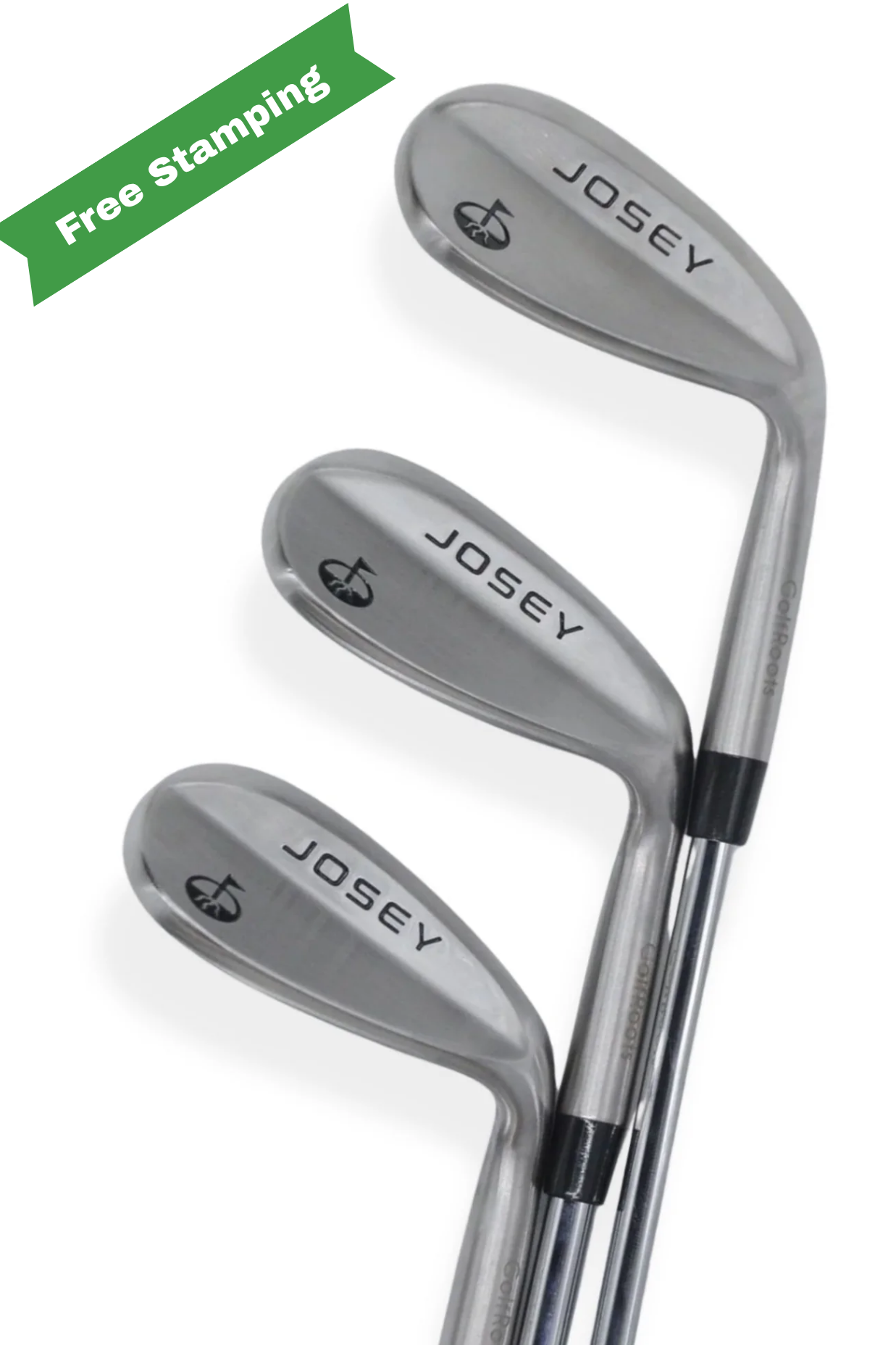
The club makes a real difference here. A sand wedge with more bounce skids through soft sand instead of digging. Our guide to wedge bounce explains which bounce fits your swing and your course, and if your bunker shots come out low and hot, a flop shot technique uses the same open-face idea.
Who invented the sand wedge?
Gene Sarazen gets the credit. In 1932 he built up the sole of a niblick with solder so it would bounce off sand instead of digging, and won the Open Championship that summer. We tell the full story in the history of the golf wedge.
Where the term comes from
"Bunker" started as a Scottish word. The Online Etymology Dictionary dates it to 1758, meaning a seat or bench, and says its deeper origin is uncertain. It may be a variant of "banker," an old word for a bench, or it may come from a Scandinavian word for boards used on ships. By 1805 it had picked up the sense of an earthen seat or bank, and by 1824 it was being used for the sand holes on golf links, which makes sense on Scottish courses where sandy hollows were often cut into banks of earth.
The military meaning, a dug-in fortification, came much later, probably from World War I. So golf had bunkers long before armies did.
"Sand trap" is the more common phrase in the U.S., but "bunker" is the official term in the Rules of Golf.
FAQ
Can you ground your club in a bunker?
No. You can't touch the sand with your club in front of or behind the ball, in a practice swing or in your backswing. The penalty is two strokes in stroke play.
Can you move a leaf or a rake in a bunker?
Yes. Since 2019 you can remove loose impediments and movable obstructions in a bunker, as long as your ball doesn't move.
Is a bunker a hazard?
The Rules of Golf stopped using the word "hazard" in 2019. Bunkers are now their own area of the course, with their own rules. Water hazards became penalty areas.
What club should I use in a bunker?
A sand wedge, usually 54 to 56 degrees with mid to high bounce, for greenside bunkers. From a clean lie in a shallow fairway bunker, an iron or hybrid can work.
More golf terms in our golf terms glossary, including divot and Texas wedge. Need a sand wedge? Browse used wedges, each listed with loft, bounce and a 1 to 10 condition grade.