





Your first month of golf should go in this order: learn to make solid contact at the range, spend real time on chipping and putting, play a par-3 course, then play your first 9 holes. With a 4-club set, that takes about two or three sessions a week and you'll know exactly which club to grab for every shot.
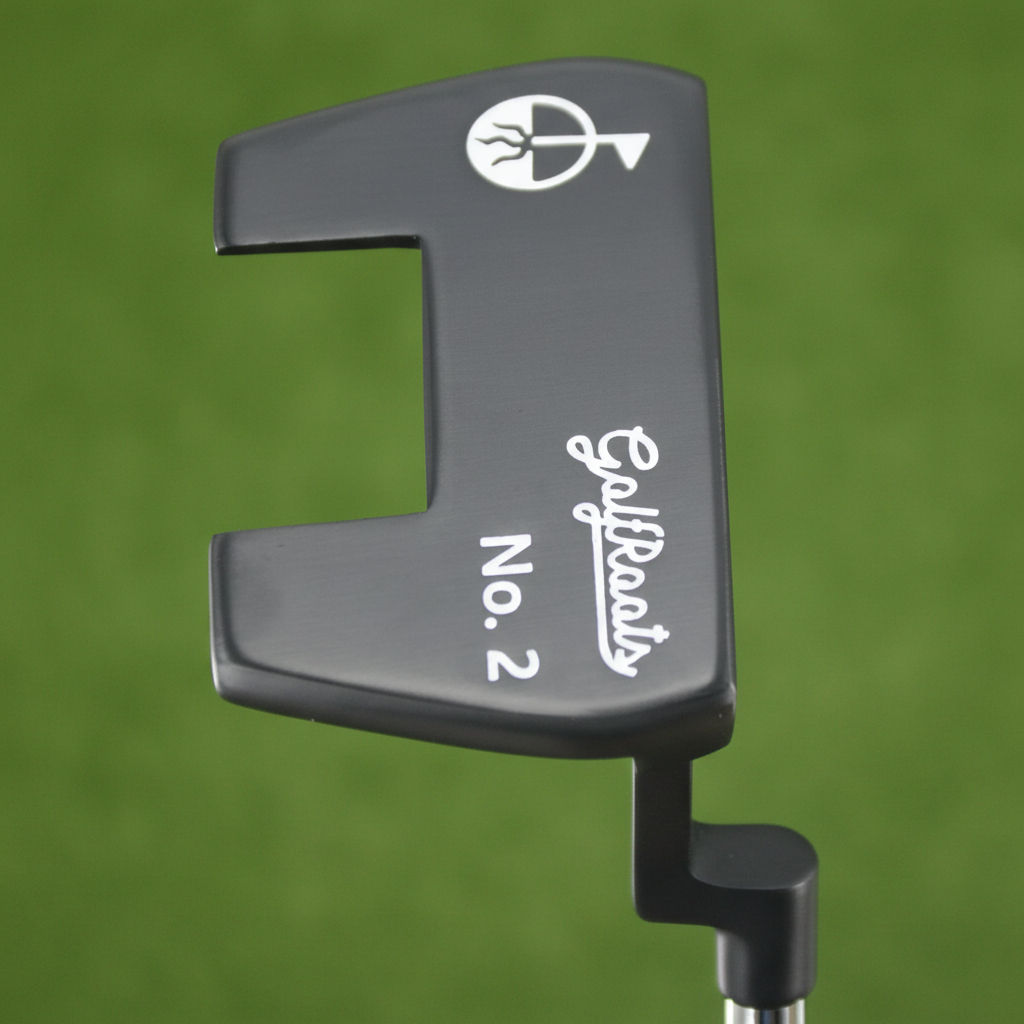
This plan assumes you're starting from zero with a wood, a 7 iron, a sand wedge and a putter, like the clubs in our Just the Roots (Starter) Set, the most affordable starter set in golf. Move faster or slower as you need to.
Which of the four clubs do you use when?
Before the plan, here's the simple version of what each club is for:
- 5 wood: your longest club. Use it off the tee on longer holes and from the fairway when you're far from the green.
- 7 iron: your workhorse. Use it for medium-length shots, tee shots on short par 3s, and low running chips from just off the green.
- Sand wedge: for short pitches, chips that need to get up in the air, and anything in a bunker.
- Putter: on the green, and from the fringe when the grass is short and smooth.
When you're stuck between two clubs, take the 7 iron and make a shorter swing. It's the most forgiving choice you have.
Week 1: How should you start at the driving range?
Go to the range two or three times and hit only the 7 iron. That sounds boring, but it's the fastest way to learn. You're not trying to hit it far. You're trying to hit the ball first and the ground second, and to get the ball in the air most of the time.
- Get a small or medium bucket. Quality beats quantity.
- Start with half swings. Make them longer only when contact feels consistent.
- Take a break every 15 to 20 balls. Tired swings build bad habits.
If you're in North Texas, our list of the best driving ranges in Dallas-Fort Worth will help you find one close by.
Week 2: When do you add the 5 wood and short game?
Keep half of each range session on the 7 iron, and spend the other half on the 5 wood. The 5 wood has a longer shaft and a flatter swing, so expect it to feel different. Let the club sweep the ball off the turf or a low tee instead of hitting down on it.
This is also the week to find the practice green. Most ranges have one. Spend at least as much time there as you do hitting full shots:
- Putting: practice 3 to 6 foot putts until they feel routine, then work on rolling long putts close.
- Chipping: try the same chip with the 7 iron and the sand wedge and notice how differently the ball rolls. Our post on the bump and run explains the 7 iron version.
- Pitching: hit short sand wedge shots that fly most of the way. If chip vs pitch is confusing, read chip vs pitch in golf.
Most of the strokes in a beginner's round happen within 50 yards of the hole. Time here pays off right away.
Week 3: Why play a par-3 course first?
A par-3 course is the best first step onto a real course. The holes are short, rounds are quick, and nobody expects you to be good. You'll use the 7 iron or the 5 wood off most tees, the sand wedge around the green and the putter to finish.
Don't worry about your score yet. Pick up your ball if a hole is getting away from you and keep things moving. The goal is to get comfortable with how a course works: where to stand, when to hit, how to fix a ball mark. Our golf terms glossary is handy if you hear something unfamiliar.
Local readers can find options in our guide to par-3 and 9-hole courses in Dallas-Fort Worth.
Week 4: How do you play your first 9 holes?
Book a 9-hole round at a public course, ideally at a quiet time like a weekday afternoon or twilight. Play from the forward tees. Here's a simple way to use your four clubs on a full-length hole:
- Par 3: 7 iron or 5 wood depending on the distance, then wedge and putter.
- Par 4: 5 wood off the tee, 7 iron to get closer, then wedge and putter.
- Par 5: 5 wood, 5 wood again if you have room, 7 iron, then wedge and putter.
If you want a reference for what a good score on each hole looks like, read what par means in golf. Then forget about it for now. A first round is about finishing, not about par.
What should you do after your first month?
Keep the same mix: range sessions, short game practice and rounds on shorter courses. Most new golfers can play with four clubs for a good while. When the gaps between clubs start to bug you and you're playing regularly, it's time to look at a full set.
That's where the starter set pays off. You get 100% of what you paid for the Just the Roots set back in store credit toward any full set from GolfRoots, and you keep playing it until the new clubs arrive.
Common questions
How often should a beginner practice golf?
Two or three short sessions a week works better than one long one. An hour at the range with half of it spent on the practice green is plenty.
Can you play a full round of golf with only four clubs?
Yes. The rules allow up to 14 clubs, but there's no minimum that matters for a beginner. Four clubs get you around any public course. You'll just hit a few more shots on the longest holes.
Where can I try the clubs before I start?
Come by our shop at 13260 Josey Ln, Suite 106 in Farmers Branch. We have a simulator where you can hit the starter set clubs. We're open Monday through Friday, 8am to 5pm, and you can reach us at 214-302-7440.