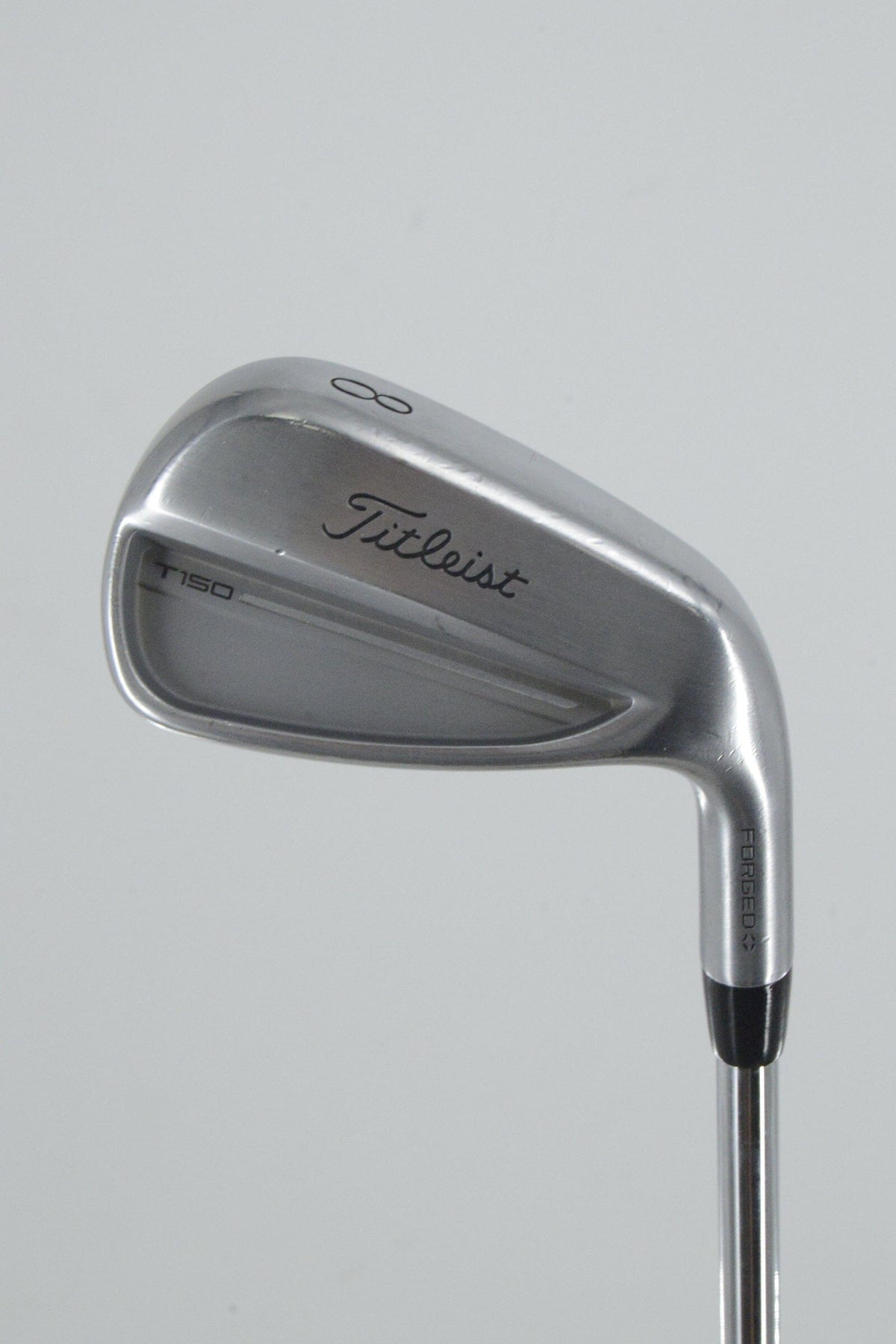




Vokey wedges are Titleist's wedge line, designed by master craftsman Bob Vokey, and Titleist says they have been the top choice of PGA Tour players every year since 2004. When the SM10 came out in January 2024, Titleist said more than half of all wedges in play on the PGA Tour the season before were Vokeys. For used club buyers, that long run of success is good news: older SM generations are everywhere, they were built to the same tour standard, and they cost a fraction of new.
Who is Bob Vokey?
Bob Vokey is a club maker who built his reputation working directly with tour players. Before Titleist, he worked for Founders Club, a metal woods company. When he arrived at Titleist in the mid-1990s, his first job was helping finalize the specs of the Titleist 975D titanium driver. Titleist then asked him to lead a push into high-performance wedges. According to Titleist, after eight months of prototypes, the first Vokey Design wedge went into play at the 1997 St. Jude Classic in Memphis.
His method has stayed the same since: spend time on tour ranges, practice greens and bunkers, watch how players use their wedges, and take notes. Titleist calls the tours "the best R&D facility in the world."
What does SM mean on a Vokey wedge?
SM stands for Spin Milled. Instead of being cast into the face, each groove is cut individually, and Titleist says every groove is inspected to make sure it conforms to the Rules of Golf. The first Spin Milled wedges arrived in the mid-2000s, and the numbered SM generations followed. A heat treatment on the impact area, which Titleist says doubles groove durability, has been part of recent generations including SM8 and SM10.
How have the Vokey SM generations changed?
- SM4 (2012) and SM5 (2014): the first numbered generations after the 2010 groove rule change, still common on the used market at very low prices.
- SM6 (2016): introduced progressive center of gravity, where the CG moves with loft so lower lofts feel more like irons and higher lofts stay controllable.
- SM7 (2018): refined that progressive CG idea.
- SM8 (2020 at retail): moved the CG forward using longer hosels and tungsten in the toe, which Titleist says raised MOI by up to 7% in higher lofts. It came in F, S, M, K, L and D grinds, and finishes included Tour Chrome, Brushed Steel, Jet Black and custom Raw.
- SM9 (2022): continued the forward CG design with refined shaping and grinds.
- SM10 (2024): retail arrival March 8, 2024. It brought refined progressive CG (lower and more centered in 46 to 52 degrees, higher and more forward in 54 to 62), TX9 grooves cut by loft and finish, and F, S, M, K, T and D grinds. A Nickel finish joined Tour Chrome and Jet Black.
What do the Vokey grind letters mean?
A grind is the shape of the sole, and it controls how the wedge interacts with turf and sand. In plain terms:
- F grind: a full sole, best for full swings with a square face. Common in pitching and gap wedge lofts.
- S grind: a bit of trailing edge relief for players who mostly keep the face square but want some versatility.
- M grind: heel, toe and trailing edge relief for players who open the face around the green.
- D grind: higher bounce with shaping that still lets you open the face. Good for steeper swings and soft conditions.
- K grind: a wide, high bounce sole, the most forgiving option in bunkers.
- L and T grinds: low bounce options for tight lies, firm turf and skilled players who manipulate the face.
If you're unsure, start with bounce. Our guide to wedge bounce explains how your divot and course conditions point you to the right number. If you take deep divots, read what your divot says about your swing.
Is an older Vokey wedge still worth buying?
Usually yes, with one condition: check the grooves. Shape and grind don't wear out, but grooves do, and worn grooves mean less spin on partial shots and from the rough. When you look at a used Vokey, check the face in the area where the ball strikes, look for flattened groove edges, and read the condition grade. Our guide on how to judge the condition of used golf clubs walks through it.
On October 29, 2026 we had more than 500 used Vokey wedges listed, including over 100 each of SM8, SM9 and SM10. Shop by generation: SM7, SM8, SM9 and SM10, or see all Titleist Vokey wedges. For a side-by-side, read Vokey SM8 vs SM9 vs SM10.
Common questions
When did Bob Vokey join Titleist?
In the mid-1990s. Titleist says the first Vokey Design wedge was put in play at the 1997 St. Jude Classic.
What is the newest Vokey wedge?
As of this writing, the SM10, which reached golf shops on March 8, 2024.
Are Vokey wedges the most used on tour?
Titleist says Vokeys have been the top choice on the PGA Tour every year since 2004, and that more than 50% of wedges in play in the season before SM10 launched were Vokey Design.
Can I trade in my old Vokey wedges?
Yes. Get a value on our trade-in page and put it toward a newer set of wedges.
This is part of our equipment history series. Read the history of the golf wedge, the history of the putter and the Scotty Cameron story.